Here’s the Imagery Exercise I promised you this morning on Face Book. The exercise is called Live Now To Clear Up The Past.
One of its aims is to help you see a past event in the light of today.
If you’re new to Imagery, you’ll find instructions for the breathing, a key component of Imagery, highlighted in a May 2011 blog listed in the Archives menu in the right-hand column. You’ll also find a chapter called Instructions For Imaging in the Table of Contents of The Encyclopedia of Mental Imagery edited by Gerald Epstein, M.D. and me, Barbarah L. Fedoroff.
Live Now To Clear Up The Past:
Close your eyes and breathe out one time. Be in a classroom. Live your experience there in a new way. (Keep your eyes closed.)
Breathe out one time. Be in a playground. Live your experience there in a new way. Breathe out one time and Open your eyes.
CLICK HERE FOR AUDIO IMAGERY LIVE NOW TO CLEAR UP THE PAST
HAVE YOU ORDERED THE ENCYCLOPEDIA OF MENTAL IMAGERY?
This is a unique opportunity to experience the Imagery exercises created by Colette Aboulker-Muscat, a twentieth century spiritual master. The Encyclopedia of Mental Imagery is an anthology of 2100 visualization exercises for self-discovery, healing, inspiration and transformation. Never before has this work been compiled and published.
The book is co-edited by Gerald Epstein, M.D. and Barbarah L. Fedoroff . You’ll find it at <amazon.com> and <Barnes and Noble>. Or ask for it at your favorite bookstore.
This week we continue with our Audio Imagery presentation of Colette’s exercises published in The Encyclopedia of Mental Imagery. Each chapter of exercises begins with a quotation that expands our minds and hearts to the theme’s possibilities for us.
Personal Restoration opens with a quote from Colette’s poem Knowing that tells us:
“I am not part of Totality! Totality is me, into me. I know then that I am infinite, immortal. New Forever.”
The quote reminds us that each time we discover something new about ourselves…Each time we recognize a personal belief as no longer beneficial in our lives and replace it with a new, authentic belief…Each time we correct an error…We are healing the past, present and future, where we have the potential to be forever new.
Going Back To An Imagery Instruction
When I first began doing Imagery there were times when I wasn’t able to keep up with the reader. Soon I learned not to be concerned about it. I was hearing and retaining what was important for me at that moment.
Sometimes you may feel you haven’t had enough time to spend on all there is in an Imagery instruction. Go back to what you feel is important for you before moving onto another exercise. Close your eyes, breathe out three times and imaginally hear the words. Stay in the Imagery for no more than fifteen seconds. Breathe out and open your eyes.
Correcting A Disturbing Image
There may be times when a disturbing image comes up.To make a correction,close your eyes, go back into the image and using your left hand, sweep the disturbing image up and off the upper left corner of your “imagery screen”. Breathe out one time and open your eyes. (If you are left handed, sweep up and off the upper right corner.) For more on modifying an image, see page 15, first full paragraph in The Encyclopedia of Mental Imagery.
This Week’s Imagery – The Whole Person: Sexuality
These exercises have been recorded in groups. At the end of each exercise you’ll find a quiet space of 8 seconds to focus on your images. This is followed by instructions for the next exercise. Listen carefully. Sometimes you are to breathe out one time and open your eyes, other times you are only to breathe out one time or three times with your eyes remaining closed, and the exercise continues. When the group of exercises is completed, you’ll hear me instruct you to breathe out one time and open your eyes, followed by a beep on the tape. The simple version: until you hear the beep, there may be another instruction.
Before you begin an Imagery session, review the Audio tapes and decide how you want to complete the whole series in a week.
CLICK HERE FOR THE AUDIO IMAGERY THE WHOLE PERSON, SEXUALITY EX. 1
CLICK HERE FOR THE AUDIO IMAGERY THE WHOLE PERSON, SEXUALITY EX 2
CLICK HERE FOR THE AUDIO IMAGERY THE WHOLE PERSON, SEXUALITY Ex 3
CLICK HERE FOR THE AUDIO IMAGERY THE WHOLE PERSON, SEXUALITY EX 4
CLICK HERE FOR THE AUDIO IMAGERY THE WHOLE PERSON, SEXUALITY EX 5
CLICK HERE FOR THE AUDIO IMAGERY THE WHOLE PERSON, SEXUALITY EX 6
CLICK HERE FOR THE AUDIO IMAGERY THE WHOLE PERSON, SEXUALITY EX 7
CLICK HERE FOR THE AUDIO IMAGERY THE WHOLE PERSON, SEXUALITY EX 8
CLICK HERE FOR THIS WEEK’S SPONTANEOUS IMAGERY: THE TOWER, THE BEST
Happy Imaging! Barbarah
A special thank you to Margaret, who called my attention to the need to address phrases being read too quickly. I hope About Listening To Imagery Exercises is helpful.
Also, how is your Personal Imagery Notebook coming along?
_________
To receive notification when a blog is posted, become a Subscriber. See the lower right hand column of the blog’s first page.
Now you can experience the Imagery exercises created by Colette Aboulker-Muscat and presented in the Encyclopedia for Mental Imagery as others have in live Imagery groups. Each week we’ll present a group of exercises that have stood the test of time–and re-create, as best we can, a live Imagery experience. I’ll be reading the Imagery exercises for you through the Audio Imagery feature we introduced here last year.
After completing the group of Imagery exercises selected for the week–or doing the one spontaneously selected exercise–consider creating a Personal Imagery Notebook to reinforce your experience. You can also draw your impression of your images with colored pencils. Make a point of noticing the images you see, sounds you may hear, body sensations, emotions and new or deeper personal understandings.
PERSONAL RESTORATION by Colette Aboulker-Muscat
Personal Restoration is the first chapter of exercises in The Encyclopedia of Mental Imagery. This week, we focus on Self-Healing and Self-Sculpture. You can do Self-Healing on the first day and continue on with one of the three exercises in Self-Sculpture for the next three days, and begin again. You can also do the whole group each day. Or stick with Self-Healing. The choice is yours.
As promised, there’s also a Spontaneously Selected exercise called Light Images. This exercise can be done each day and the results logged in your Personal Imagery Notebook.
If you have questions as you do the exercises, contact me through the Comment Section of this blog–or e-mail me at fedzie@ptd.net.
Click Here for Audio Imagery:Personal Restoration, Self-Healing
Click Here for Audio Imagery:Personal Restoration,Self-Sculpture, Ex 1
Click Here for Audio Imagery:Personal Restoration, Self-Sculpture, Ex 2
Click Here for AudioImagery:Personal Restoration, Self-Sculpture, Ex 3
Click Here for Audio Imagery: Spontaneous Selection, Light Images (Page 61 of Encyclopedia of Mental Imagery)
_________
Have you told your friends about The Encyclopedia of Mental Imagery? This anthology of 2100 Imagery exercises by Colette Aboulker-Muscat represents the work of a twentieth century spiritual master who has helped thousands face and overcome life’s challenges. Now Colette’s life-changing Imagery exercises are available to you.
Need a gift? The Encyclopedia of Mental Imagery is a gift of self-discovering for someone you care about.
Order The Encyclopedia of Mental Imagery through amazon.com, Barnes and Noble–or ask for it at your local bookstore.
See you next week with a new group of Colette’s Imagery exercises.
Blessings! Barbarah
(The information in this blog is presented with the support of the American Institute for Mental Imagery.)
COLETTE’S IMAGERY/VISUALIZATION EXERCISES ARE NOW AVAILABLE ON THE AUDIO IMAGERY FEATURE OF BARBARAH’S BLOG. BEGINNING ON SATURDAY, JULY 7, 2012, I’LL BE YOUR PERSONAL IMAGERY READER, FREEING YOU TO FOCUS ON THE CONTENT OF COLETTE’S EXTRAORDINARY GIFT OF IMAGERY NOW AVAILABLE TO ALL OF US.
The Encyclopedia of Mental Imagery, co-edited by Dr. Gerald Epstein and Barbarah L. Fedoroff, is a compilation of 2100 Imagery exercises created by Colette Aboulker-Muscat for thousands who sought her personal support when meeting life’s challenges.
Discover the life-changing potential of Colette’s exercises in the Encyclopedia of Mental Imagery, available at amazon.com, Barnes and Noble–or ask for it at your local bookstore.
Colette’s work has led thousands to a deep understanding of self, unleashed their creativity, and much more…
Introducing Your Personal Imagery Reader
Barbarah L. Fedoroff
I’m your Personal Imagery Reader, using the Audio Imagery feature we introduced on Barbarah’s Blog last year. You’ll find Colette’s exercises presented in two ways: (1) Audio Imagery: Following the Book and (2) Audio Imagery: Spontaneous Selection.
Audio Imagery: Following the Book – The first recordings feature Personal Restoration, Self-Healing and Self-Sculpture, the series that opens The Encyclopedia of Mental Imagery. Each week, I’ll record the next group of exercises–or begin the following series.
Simply click on the Audio Imagery icon and you’ll hear complete instructions for the special Imagery breathing technique, followed by the narrative of the exercises. I’ll let you know where the groups of exercises end, so you may judge when it’s time for you to end that day’s Imagery experience. Before you begin, consider reviewing Your Guide to Doing Imagery on pages 11 through 16 in The Encyclopedia of Mental Imagery or go to the index for Barbarah’s Blog and click on May 2011.
Audio Imagery: Spontaneous Selection – If you prefer to familiarize yourself with the scope of Colette’s exercises, I’m randomly selecting a single exercise on each Friday and recording it after the From-the-Book exercises.
If you have any questions before or after beginning Imagery, let me know through the comments section of Barbarah’s Blog–or e-mail me at fedzie@ptd.net. (You can request that your comment not be published and I will answer you directly.)
Happy Imaging! Barbarah
P.S. You can also select your own exercise spontaneously, a method described on page 11, 1) Spontaneous Selection under Creating An Imagery Practice That Resonates With You in The Encyclopedia of Mental Imagery.
…Colette Aboulker-Muscat’s 2,100 Visualization Exercises For Personal Development, Healing, And Self-Knowledge
. Gerald Epstein, M.D., Editor . Barbarah L. Fedoroff, Editor
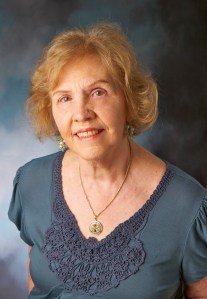
Barbarah L. Fedoroff
WELCOME TO BARBARAH’S BLOG!
There are times when we find ourselves in the company of spiritual teachers who freely share the riches of their discoveries that lead us to the higher wisdom that dwells within. I have been blessed with two such teachers, Dr. Gerald Epstein, director and founder of the American Institute for Mental Imagery, and Mme. Colette Aboulker-Muscat, the great 20th century spiritual master.
To be invited by Dr. Epstein to co-edit The Encyclopedia of Mental Imagery with him, and to play a role in bringing Colette’s Mental Imagery exercises to others so they too may experience their capacity for transformation, is a gift I treasure.
Now You Can Benefit From Colette’s Mental Imagery Exercises With The Encyclopedia of Mental Imagery
The Encyclopedia of Mental Imagery is an anthology of imagery exercises created by Colette, which takes seekers on a personal pilgrimage of self-discovery. On this imaginal journey, you’ll spend a few minutes a day following Colette’s imagery instructions that have drawn thousands to their inner wisdom and truth. You can begin your journey by doing a single imagery exercise each morning to set the tone for the day. Or you may select another approach described in “Creating A Practice That Resonates With You” on page 11 of the the Encyclopedia of Mental Imagery.
Share in the wonder of Colette’s gifts by reading more about her life and discover how Colette’s Mental Imagery exercises can restore you to harmony, lead you to self-discovery, and transform your life by revealing and changing beliefs that are no longer beneficial to you, and so much more.
ASK FOR THE ENCYCLOPEDIA OF MENTAL IMAGERY AT YOUR FAVORITE BOOK STORE
On Pentecost we honor the day on which the Holy Spirit descended on the apostles and showered them with the gifts of the spirit: wisdom, understanding, counsel, fortitude, knowledge, and fear of the Lord, according to the original Hebrew. The Catholic version, based on the Septuagint version of Isaiah 11: 1-3 includes piety.
If you go to the Categories listing at the right hand of this blog and click on May, 2011 you’ll find an updated presentation of Pentecost and/or click on June, 2011 and you’ll find Audio Imagery for this auspicious day.
The Audio Imagery feature on this blog is inspired by the work of Colette Aboulker-Muscat. Watch for more about Colette in the coming weeks.
May the blessings of Pentecost be with you always.
The week between Palm Sunday and Easter is the holiest Christian season. Many people reflect on what this was for Jesus and those who walked this journey with Him in Jerusalem. You’ll find a series of blogs written for the Holy Week in the Archives for April and May, 2012. These are complete with Audio Imagery. The narratives and the Imagery exercises invite you to take this spiritual journey with Jesus, Mary his mother, her sister Mary, Mary Magdalene, Joanna, Susanna, Salome and the apostles; others in their spiritual community; and the many pilgrims in Jerusalem who were among those to become the first Christians.
The narratives and the Imagery exercises can be done independently, perhaps starting your day with the narrative and ending it with the Imagery just before dinner. They can also be done together.
The Holy Week (Palm Sunday to Easter) blogs are all in the April 2012 Archive
The narrative of the blogs can be used as reading meditations. You can also do the Imagery exercises on their own–or you can combine both to begin and end each day of this important season in prayerful connection with those who experienced the events so long ago: Yahweh (God); Jesus; his mother Mary; Joseph of Arimathea; Mary Magdalene; Joanna; the apostles; and other pilgrims on this spiritual journey with Jesus.
WELCOME TO BARBARAHS BLOG: FOR GOOD FRIDAY PM & SATURDAY NIGHT/EASTER DAY
Today we begin with the solemn ritual of the burial of Jesus body by Joseph of Arimathaea. Joseph is a wealthy member of the Temple Council. He believes in Jesus and does not support the actions that condemned Jesus to death. Joseph has permission to remove the body of Jesus from the site of the Crucifixion and give Jesus a proper burial.
“And he took the Lord and washed him and wrapped him in a linen shroud and brought him to a tomb where no one else had lain.” (a mark of respect) –According toSt.Peter.
Imagery Narrative: Joseph of Arimathea Buries Jesus
Close your eyes and breathe out three times. See, feel, sense and know how Joseph of Arimathaea solemnly performs a burial ritual for Jesus. First he places the body on a shelf carved into the stone tomb. He then removes the stained shroud and washes blood from Jesus wounds. Breathe out one time and open your eyes. Wait a few seconds for the audio to continue.
Close your eyes and breathe out three times. See, feel, sense and know how Joseph of Arimathaea anoints Jesus body with an ointment of myrrh, spices and aloe. As he does this, generations of women sob and lament. Now see Joseph wrap the body in linen adding ointment as he goes. When you feel the rite is complete, back out of the tomb and remain until Joseph has a large rock rolled up to the entrance of the tomb. Breathe out one time and open your eyes.
Click Here For Audio Imagery: The Burial of Jesus
_________
Narrative of the recorded contemplation called Mary Magdala Sees The Resurrected Jesus. Close your eyes and sit quietly listening to the recording. There are moments of silence after the reading. You’ll then be instructed to open your eyes.
The morning after the burial, Mary Magdalene comes with Joanna, Susanna and Salome (The women from Galilee) to the tomb and sees the rock removed. The women return to tell the apostles, but Mary Magdalene remains. Peering into the tomb she sees two angels in white sitting where Jesus body had been. They ask why she weeps and she tells them “They have taken my Lord away and I don’t know where they have put him.” As she says this, Jesus asks why she weeps. Supposing him to be the gardener, she asks if he has removed the body. Jesus says Mary’s name and she turns. Recognizing him she calls, Rabbuni, meaning Master. “Do not cling to me because I have not yet ascended to the Father, but go and tell my brothers ‘I am ascending to my Father and your Father. To my God and your God.” So Mary Magdalene tells the apostles “I have seen the Lord” and the things he said to her. From the Gospel of John, Chapter 20
Click Here for the Audio Contemplation: Mary Magdala and The Women of Galilee See That Jesus Has Risen From The Tomb
Soon after his death, Jesus began the transformation to a “light body,” in preparation for the ascension to His Father. When Mary Magdalene had last seen Jesus, immediately after the crucifixion, he bore the agony of that ordeal on his face and his flesh was bloody with wounds. During the night, after Joseph of Arimathaea completed the burial ritual, Jesus transformation was completed and he bore the countenance of who he is, the Son of God, a heavenly being who had inhabited a physical body and was called Jesus for our salvation. From that time until the Feast of Pentecost, Jesus could only be seen by those he chose to see him, among those Mary Magdalene, Mary, his mother, and the apostles.
May You Enjoy The Blessings of the Resurrection! Barbarah


 of 2100 Imagery exercises by Colette Aboulker-Muscat represents the work of a twentieth century spiritual master who has helped thousands face and overcome life’s challenges. Now Colette’s life-changing Imagery exercises are available to you.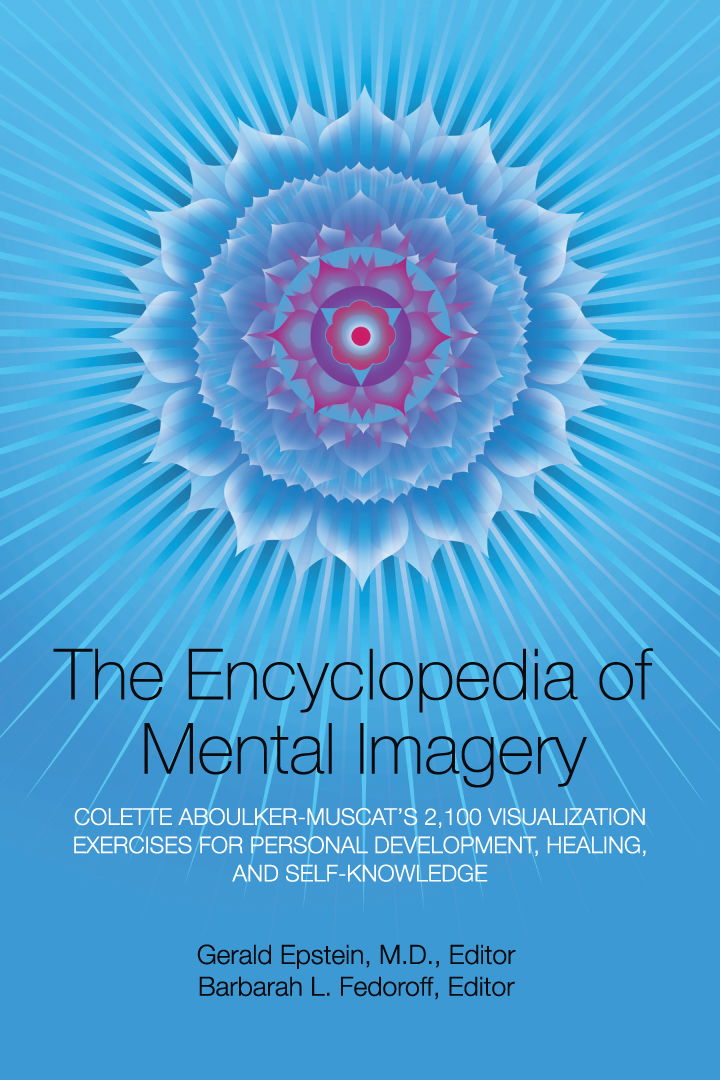

 Barbara Fedoroff
 Tools for Spiritual Living: Barbarah's Blog