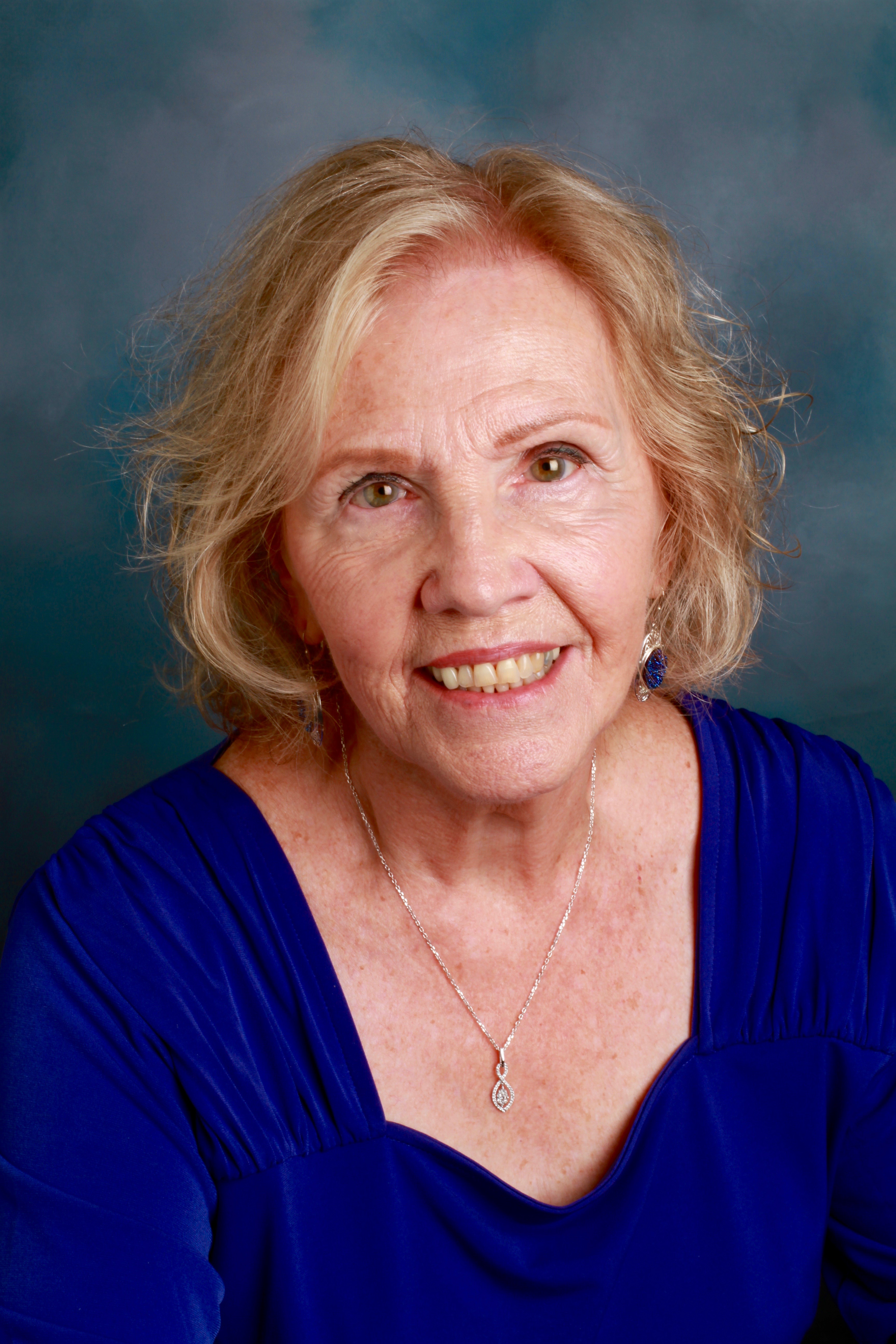
Welcome to Barbara’s Blog

This Is the Day The Lord Hath Made. Let Us Rejoice! And Be Glad He Did!

Now it’s time to take a spiritual inventory so we can gain all the benefits the universe may be passing on to us.   St. Thomas Aquinas reminds us how when Adam and Eve ate the Forbidden Fruit, they lost the likeness of God for themselves and all mortal beings.  This Likeness holds the virtues for making decisions aligned with Yahweh God. They are:  Wisdom, Understanding, Counsel, Fortitude, Knowledge, Piety and Fear of the Lord. Blessings, Barbara

As the name of the day Easter became widespread, John, known as John the Baptist, baptized those he found ready. Soon after they and the apostles began to baptize those within their circle of friends and as they traveled, Baptism became widespread.

Before going to Jerusalem to celebrate Passover, Jesus meets his cousin, John the Baptist. John was about to baptize a group of his followers in the Jordan River, a ceremony clearing their errors (sins). John regularly attracted large groups seeking a new way of life and when they were ready, he baptized them.  But this baptism was different: Jesus was among them and brought a special gift – his taking upon himself all the sins of mortals so we would have eternal life.

 Of great significance at this time, our likeness of God and the virtues lost at The Fall of Adam and Eve were reinstated. These virtues are:  wisdom, understanding, counsel, fortitude, knowledge, piety and fear of the Lord.

Between now and Easter, you too may take advantage of these wonderful gifts at your local church, or if you’re house-bound, right there.

(See below for moving forward)

.  First, let’s review the virtues so we make sure we have them all.   They’re: Wisdom, Understanding, Counsel, Fortitude, Knowledge, Piety and Fear of the Lord. 

.  Identify the virtues which regularly inform your decisions; Then focus on any one of the others not among the them;  

.  Or randomly select a virtue and focus on it.  You’re about to discover how each of them plays a role in your life by following the Imagery exercises below.  I’ve found it useful to jot down the response I’ve have to each exercise. You may, too.

Important:  Breathe out three times (BO3X) or whatever number of breaths is suggested for a particular exercise.  Immediately or soon after you’ve completed an Imagery exercise, jot down your experience.  This captures the essence of your Imagery, increasing your understanding of how and why you make your decisions. 

Following is an Imagery exercise to help you see, feel, sense and know how wisdom and understanding play a role in your life.                            

1a. Wisdom: Sit quietly, close your eyes and Breathe Out Three Times (BO3X) with an emphasis on the outbreaths. See, feel, sense and know you carry the gift of Wisdom. Remain in the Image of Wisdom with your eyes closed for about 10-15 seconds. Then breathe out one time (BO1X) and Open your eyes. 

2a. Close Your Eyes and Breathe Out Three Times (BO3X): See, feel, sense and know you carry the gift of Understanding. Focus on how Understanding enables you to assist a friend.  After a minute or so, gently Breathe Out One Time (BO1X) and Open Your Eyes.  Sit quietly for several more moments. Then write or draw what you’ve discovered. (The writing/drawing can be done a short time later) You’ll be instructed again to Close your eyes and Breathe Out One Time. (BO3X) is the “shorthand” for the instruction to Breathe out three times or (BO1X) Breathe Out One Time. The abbreviations are useful when someone is dictating the Imagery instructions to you.  (I’ve found it convenient to keep a notebook especially for Imagery to record my response to the exercises.)      

2b. Close Your Eyes and Breathe Out Three Times. (BO3X) With your eyes remaining closed, See, feel, sense and know how you extend your Understanding to others.  Stay quiet for several moments then Breathe Out One Time (BO1X) and focus on how Understanding helps your relationships.  Breathe Out One Time (BO1X) and Open Your Eyes.  Soon after, write, draw or record what you’ve discovered.  

2c. Close your eyes and Breathe Out three times (BO3X.) With your eyes remaining closed, See, feel, sense and know how you accept Understanding from others.   Stay quiet for several moments then Breathe Out One Time  and Open your eyes.

Soon after, write, draw or record the image of how you accept understanding from others.  

HOW DOES THIS RELATES TO LENT?

A lot, since Adam and Eve’s progeny was charged with populating the Earth with mortal beings.  That charge included being able to develop and prosper…for children to be taught and learn to live in harmony with one another…and for all to learn how to protect and survive living in the polarity of Planet Earth.  

Adam and Eve each lived 930 years and Adam is recorded as having fathered 930 children. As time passes, we learn there were times of harmony as well as times of strife.  Times of health and times of pain and sorrow.  But the true test is still to come since there was no deadline on our being responsible for behavior that preserves the lives of mortal beings and their environment.  We are interdependent.

Blessings to you all as we move through this Holy Season of Lent followed by the Joy of the Resurrection.  Blessings, Barbarah    

NOTE: Imagery stays with you even after the time you’ve remained quiet, Do not assume you have learned all you can from any Imagery exercise. If and when it comes to your consciousness, review what has gone on in your life since the original experience of the exercises. Record it so you can go back to it when it’s convenient or when it nudges you to give it a look.

This Is The Day The Lord Hath Made. Let Us Rejoice And Be Glad That He Did. Barbara

Thank you for being here!
Posted in Evolution of Humor - Encyclopedia of Mental Imagery | Leave a comment

Exploring the Names of Jesus in Lent

Welcome to Barbarah’s Blog

Yes, this is a re-blog.  Primarily because after  watching the President of the United State on television helping  a super-rich man “sell cars” right before our eyes at the White House requires some reaction. But as we well know, all is not lost if we value our history and how our country came to be.  It’s times like this  when I’m reminded of one of my ancestors, Johnathon Hart, who signed the Declaration of Independence. It’s unlikely he’d let this lack of  respect go without a word of dismay at where we’re headed.  That and we’re moving on to Palm Sunday and Easter, a season for showing our respect for leaders who came before us. 

Lent is a sacred season in the Church.  Each year since 2010 we’ve presented prayers and readings for these Sundays.  It seems appropriate to note here the second in a series on  The Names of Jesus.  The series was introduced early this week to honor Pope Benedict’s retirement, whose books on Jesus are mentioned below. The Pope tells us he wrote these books to help us re-discover Jesus. He has accomplished this with beautiful narrative and exceptional detail.

In researching these names, I focused on The Encyclopedia of Catholicism, The History of World Religions, Pope Benedict’s books, Jesus of Nazareth; Jesus of Nazareth: Holy Week From the Entrance Into Jerusalem To The Resurrection; and the last in the series, The Infancy Narratives.  Valentin Tomberg’s Christ and Sophia continues to be an inspiration, offering  lesser known, esoteric ideas about The Mystery of Golgotha.  Both are   beautiful and enlightening presentations particularly relevant at this time.

 The Names of Jesus

According to Catholicism and many Christian teachings, Mary, a young virgin from Nazareth in Galilee was visited by the Angel Gabriel, who announced to her “Hail, Rejoice.” For Pope Benedict, this marks the beginning of the New Testament.  Mary is to bear a child to whom the angel assigns the titles “Son of the Most High” and “Son of God.” This is followed by a series of promises, which reveal how the conception is to take place. “The Holy Spirit will come upon you, and the power of the Most High will overshadow you (in Judaism this refers to the Shekinah); therefore, the child to be born will be called holy, the Son of God.” (Lk 1:35)

In reaction to the angel’s greeting Mary is “troubled and pensive. What follows is not fear but an interior reflection on the angel’s greeting,” notes the Pope.  She ponders over what the greeting of God’s messenger could mean and asks how this will be, since she has known no man.  She is betrothed to Joseph, but has not yet lived with him.  In spite of the magnitude of what this young virgin has been asked, she replies “Let it be to me according to your word.” (Lk 1:38; 2:19,52)

“Soon after, an angel appears to Joseph in a dream–admittedly a dream that is real and reveals what is real,” states the Pope.  “This shows us an essential quality of the figure of Saint Joseph: his capacity to perceive the divine and his ability to discern.  The message conveyed to Joseph is overwhelming and it demands an extraordinarily courageous faith.”  Then Joseph is assigned another task.  “Mary will bear a son and you shall call his name Jesus, for he will save his people from their sins.”  The name Jesus (Joshua) means “YHWH is salvation.”  The divine messenger who spoke to Joseph in the dream then explains the nature of that salvation, “He will save his people from their sins.” (Mt 1:21)

In the New Testament, the name Jesus is used as a synonym to the person of Jesus and it is in his name (i.e. the power of his name) that the disciples baptize and work miracles.

This establishes the given name of Jesus and the announcement of two other names describing his lineage, “Son of the Most High and Son of God”.  

As Jesus begins healing the sick and performing miracles, people assign him names that help them gain an understanding about this young man from Nazareth.  They know he has no rabbinical training so cannot grasp how he comes to what he preaches or the special skills he demonstrates as a speaker and leader.

The designation Christ is soon attached to his given name and he is called both Jesus Christ and Christ Jesus.  Another designation used by his disciples is The Christ.  It is important to realize that Jesus uses none of these names in relation to himself.  There are a few exceptions, which will be noted.

Christ comes from the Greek, Christos, “the anointed one,” according to the Encyclopedia of Catholicism.  Pope Benedict defines it as equivalent to the Hebrew title, “Messiah,” a term meaning the promised one, who is to come.”

Jesus Christ and Christ Jesus  were used by those experiencing or hearing of the miracles and healings Jesus was  performing.

The Christ is how his disciples acknowledged him. (Mk 8:29; Acts 5:42, 9:22; Rom 5:6)  Among Jesus followers, this use became Jesus proper name. (Ga 1:6; Hebrews 9:11)

Lord comes from Kyrios and had become a paraphrase for the divine name in Judaism.

Son of Man  is, according to Pope Benedict, a mysterious term Jesus used for himself, a term he utters 14 times in the Gospel of Mark alone.  In fact, in the whole of the New Testament, Son of Man is found only on Jesus lips, with the exception of the vision of the open heavens granted to the dying Stephen, “Behold I see the heavens open and the Son of Man standing at the right hand of God.” (Acts 7:56)

Son refers to Jesus as Son of God.

Son of God and Son of the Most High relate to Jesus life within the Holy Trinity, a  doctrine that declares there is one God indivisible and insoluble in three Divine Persons, Father, Son and Holy Spirit.  Valentin Tomberg tells us in Christ and Sophia that “the Father thought all thoughts, and no longer creates new thoughts, for all the ideas, even to the end of the world, were thought or created by him in the very beginning.  But the thoughts of the Father would have remained as mere thoughts unto eternity if the Son had not breathed life into them.” 

There are numerous references to these terms in Christ and Sophia by Valentin Tomberg.  All are indicated in the book’s extensive index.  This book is a magnificent, insightful and esoteric presentation of The Mystery of Golgotha. It is also valuable reading for all  seeking the female presence in the life of Jesus and the founding of Christianity.

May you have a holy Lenten season.  Barbarah

P.S.  The hallmark of Imagery is that is offers opportunities for a deep encounter in a brief period of time.  Consider using the Audio Imagery of the prayers and readings as your daily practice for Lent, especially if you are burdened with time constraints.  During these trying periods Imagery is a best friend. (To retrieve the Lent Imagery, type Lent, 2012 in the Search box in the upper, right corner of the post.)

Posted in Evolution of Humor - Encyclopedia of Mental Imagery | Tagged , , , , | Leave a comment

THE NAMES OF JESUS: IN REVERENCE OF LENT

WELCOME TO BARBARAH’ S BLOG

Yes, this is a re-blog.  Primarily because after  watching the President of the United State on television helping  a super-rich man “sell cars” right before our eyes at the White House requires some reaction. But as we well know, all is not lost if we value our history and how our country came to be.  It’s times like this  when I’m reminded of one of my ancestors, Johnathon Hart, who signed the Declaration of Independence. It’s unlikely he’d let this lack of  respect go without a word of dismay at where we’re headed.  That and we’re moving on to Palm Sunday and Easter, a season for showing our respect for leaders who came before us.

Lent is a sacred season in the Church.  Each year since 2010 we’ve presented prayers and readings for these Sundays.  It seems appropriate to note here the second in a series on  The Names of Jesus.  The series was introduced early this week to honor Pope Benedict’s retirement, whose books on Jesus are mentioned below. The Pope tells us he wrote these books to help us re-discover Jesus. He has accomplished this with beautiful narrative and exceptional detail.

In researching these names, I focused on The Encyclopedia of Catholicism, The History of World Religions, Pope Benedict’s books, Jesus of Nazareth; Jesus of Nazareth: Holy Week From the Entrance Into Jerusalem To The Resurrection; and the last in the series, The Infancy Narratives.  Valentin Tomberg’s Christ and Sophia continues to be an inspiration, offering  lesser known, esoteric ideas about The Mystery of Golgotha.  Both are   beautiful and enlightening presentations particularly relevant at this time.

The Names of Jesus

According to Catholicism and many Christian teachings, Mary, a young virgin from Nazareth in Galilee was visited by the Angel Gabriel, who announced to her “Hail, Rejoice.” For Pope Benedict, this marks the beginning of the New Testament.  Mary is to bear a child to whom the angel assigns the titles “Son of the Most High” and “Son of God.” This is followed by a series of promises, which reveal how the conception is to take place. “The Holy Spirit will come upon you, and the power of the Most High will overshadow you (in Judaism this refers to the Shekinah); therefore, the child to be born will be called holy, the Son of God.” (Lk 1:35)

In reaction to the angel’s greeting Mary is “troubled and pensive. What follows is not fear but an interior reflection on the angel’s greeting,” notes the Pope.  She ponders over what the greeting of God’s messenger could mean and asks how this will be, since she has known no man.  She is betrothed to Joseph, but has not yet lived with him.  In spite of the magnitude of what this young virgin has been asked, she replies “Let it be to me according to your word.” (Lk 1:38; 2:19,52)

“Soon after, an angel appears to Joseph in a dream–admittedly a dream that is real and reveals what is real,” states the Pope.  “This shows us an essential quality of the figure of Saint Joseph: his capacity to perceive the divine and his ability to discern.  The message conveyed to Joseph is overwhelming and it demands an extraordinarily courageous faith.”  Then Joseph is assigned another task.  “Mary will bear a son and you shall call his name Jesus, for he will save his people from their sins.”  The name Jesus (Joshua) means “YHWH is salvation.”  The divine messenger who spoke to Joseph in the dream then explains the nature of that salvation, “He will save his people from their sins.” (Mt 1:21)

In the New Testament, the name Jesus is used as a synonym to the person of Jesus and it is in his name (i.e. the power of his name) that the disciples baptize and work miracles.

This establishes the given name of Jesus and the announcement of two other names describing his lineage, “Son of the Most High and Son of God”.  

As Jesus begins healing the sick and performing miracles, people assign him names that help them gain an understanding about this young man from Nazareth.  They know he has no rabbinical training so cannot grasp how he comes to what he preaches or the special skills he demonstrates as a speaker and leader.

The designation Christ is soon attached to his given name and he is called both Jesus Christ and Christ Jesus.  Another designation used by his disciples is The Christ.  It is important to realize that Jesus uses none of these names in relation to himself.  There are a few exceptions, which will be noted.

Christ comes from the Greek, Christos, “the anointed one,” according to the Encyclopedia of Catholicism.  Pope Benedict defines it as equivalent to the Hebrew title, “Messiah,” a term meaning the promised one, who is to come.”

Jesus Christ and Christ Jesus  were used by those experiencing or hearing of the miracles and healings Jesus was  performing.

The Christ is how his disciples acknowledged him. (Mk 8:29; Acts 5:42, 9:22; Rom 5:6)  Among Jesus followers, this use became Jesus proper name. (Ga 1:6; Hebrews 9:11)

Lord comes from Kyrios and had become a paraphrase for the divine name in Judaism.

Son of Man  is, according to Pope Benedict, a mysterious term Jesus used for himself, a term he utters 14 times in the Gospel of Mark alone.  In fact, in the whole of the New Testament, Son of Man is found only on Jesus lips, with the exception of the vision of the open heavens granted to the dying Stephen, “Behold I see the heavens open and the Son of Man standing at the right hand of God.” (Acts 7:56)

Son refers to Jesus as Son of God.

Son of God and Son of the Most High relate to Jesus life within the Holy Trinity, a  doctrine that declares there is one God indivisible and insoluble in three Divine Persons, Father, Son and Holy Spirit.  Valentin Tomberg tells us in Christ and Sophia that “the Father thought all thoughts, and no longer creates new thoughts, for all the ideas, even to the end of the world, were thought or created by him in the very beginning.  But the thoughts of the Father would have remained as mere thoughts unto eternity if the Son had not breathed life into them.” 

There are numerous references to these terms in Christ and Sophia by Valentin Tomberg.  All are indicated in the book’s extensive index.  This book is a magnificent, insightful and esoteric presentation of The Mystery of Golgotha. It is also valuable reading for all  seeking the female presence in the life of Jesus and the founding of Christianity.

May you have a holy Lenten season.  Barbarah

P.S.  The hallmark of Imagery is that is offers opportunities for a deep encounter in a brief period of time.  Consider using the Audio Imagery of the prayers and readings as your daily practice for Lent, especially if you are burdened with time constraints.  During these trying periods Imagery is a best friend. (To retrieve the Lent Imagery, type Lent, 2012 in the Search box in the upper, right corner of the post.)

Posted in Evolution of Humor - Encyclopedia of Mental Imagery | Tagged , , , , | Leave a comment

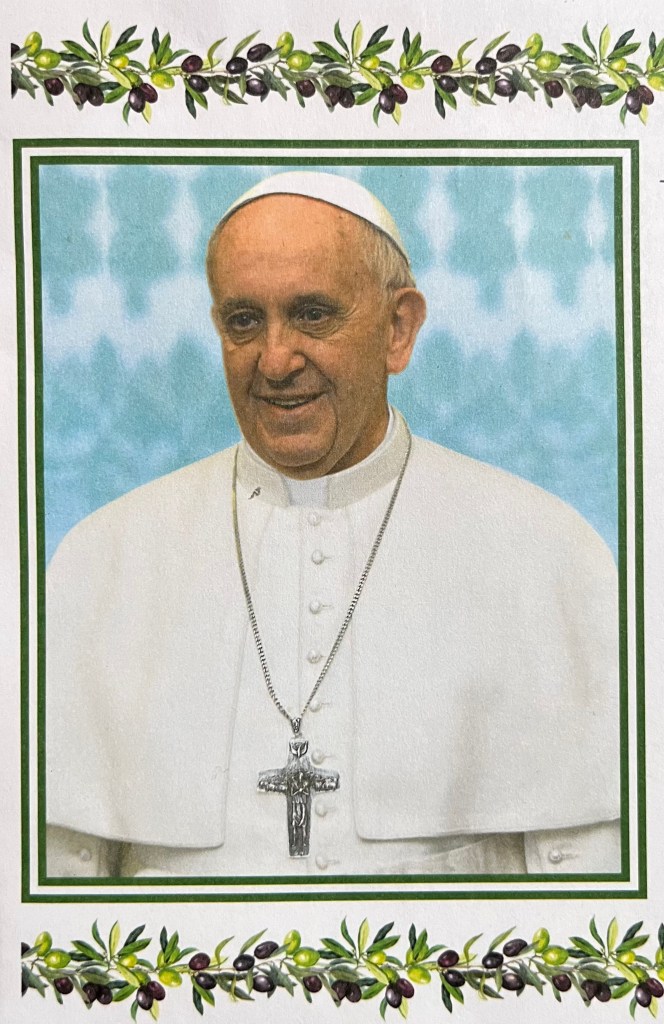
HIS EMINANCE POPE FRANCIS EXTENDS AN APOSTOLIC BLESSING TO BARBARA FEDOROFF

This week Holy Father Pope Francis has given an Apostolic Blessing to Barbara Fedoroff of Stroudsburg, Pennsylvania for the many acts of loving kindness she extends to God’s children with the greatest needs.

“Because you have shown you care deeply about your brothers and sisters in need, I am honored to send you the enclosed Apostolic Blessing from our Holy Father Pope Francis,” noted Chad McEachern, Missions Director for Edmundite Missions in Selma, Alabama.

I pray you will continue extending your love to God’s children who struggle each day amidst the grinding poverty that pervades their lives, noted Chad McEachern, Missions Director.

Posted in Evolution of Humor - Encyclopedia of Mental Imagery | 1 Comment

“The Stopping Exercise”

Barbarah Fedoroff

Fear places us in the past, which is gone: Or in the future, which is not yet ours.

The exercise given to you by DKOT actually places you in the present moment. It shifts your attention to the object you chose to focus on which is now in your memory, where you can easily retrieve it. Now, even when the object itself isn’t with you, you can simply: 1. Close your eyes, 2. Breathe out gently three times and 3. See the image of your Focus Object in your hand. Examine it as previously instructed by DKOT. Then Stay With It for a long moment. 4. Breathe out one time and open your eyes.

By shifting your attention to the image of the object you shifted your attention away from fear. Without your attention the fear left.

EXPERIENCING HOW THIS STOPPING EXERCISE WORKS IN PUBLIC

Let’s say there was a bully who thought it was fun to mock you in the playground. Now you’re an adult standing with a group of friends at a party. You see the bully entering the room and feel the fear inching up on you. This could be a fight-or-flight situation. Or not! You’ve been practicing the DKOT exercise — but you ask yourself “what good does it do now that I’m not at home?” It does everything for you. Just do it! Please! You know what your focus object looks like: You have a memory of it in your mind from practicing. 1. Close your eyes, see, feel, sense and know your focus object is secure in your memory. 2. Calmly allow its image to come into your mind. 3. Examine it for a long moment. 4. Feel the fear leaving you. 5. When you sense the fear has gone, Gently breathe out one time and open your eyes!

Know now how you can control the fear at any moment from any place!

Rejoice, Barbarah

Note to someone who may be reading the exercise to you: Imagery works best when you pace it as if it was a conversation.

Less Is More In Imagery. Try Not To Stay In The Imagery For More Than 60 Seconds After the Image Has Appeared. (Repeat 3 X a day for the first three days, before breakfast, lunch and dinner.) To enhance the experience, draw a picture of your Imagery result and watch how it may change from day-to-day. I’ve used a spiral-bound notebook for this, drawing the pictures side-by-side.(I’ve found Imagery to be very forgiving. If you miss a session’s time, do it as soon as you can after you remember. The most important time, of course, is as soon as you feel a fear episode coming on. Try not to schedule your regular Imagery immediately after a meal, unless an episode is coming up.

P.S. DKOT is still hard at work. Move him along in his process by closing your eyes and sending him your best wishes.

Posted in Evolution of Humor - Encyclopedia of Mental Imagery | Leave a comment

HELPING CHILDREN COPE WITH THE UVALDE TRAGEDY

As I write this, I’m hoping to bring you something useful, something to ease your pain. But words sound hollow, and tears flow imagining the pain you must feel. My prayers go out to you all and to those you lost. Each child is precious. Each had their own unique way of being in the world. And each is fixed in your memory forever. Protect these memories. From them you’ll gain strength you never realized you had. Blessings, Barbara

PROTECT YOUR HOME AS A SAFE HAVEN You control your own environment, so let’s make home as healing as possible. Here are a few suggestions:

Give TV a rest. You’ll save your energy for positive acts of loving kindness, protect your children from the details and retelling this tragedy, and maintain an atmosphere of normalcy in your home. Make it a respite from everything going on beyond your doors or being broadcast on the news.

Take the advice of your child’s school counselor about answering your child’s questions. Nothing is more confusing for a child than to get several variations of what has happened and why. And try not to pressure children to talk about the tragedy. When ready, they’ll initiate the conversation. They need time to process the information they have and to grieve in their own way.

Spontaneous drawing is a gentle way for children – and adults – to express what they cannot put in words. Keep paper, crayons and colored pencils in many colors accessible. Resist analyzing the drawings. Simply ask the child if she/he would like to tell you about their picture. For some children, much will gush out. Others may draw little, which is all they’re ready to express. When ready, the child will seek you out. If your child wants to display the drawing(s) that’s fine. It’s also fine for them to keep the drawings private.

Keep track of these drawings. They tell a story and can be a valuable tool throughout your healing.

Blessings, Barbarah

P.S. I believe each of us has a Guardian Angel. Know how your child’s Guardian Angel is with him/her at this time, giving precious care. These GA’s cross religious barriers so all are within their reach and their gentle embrace. B

Posted in Evolution of Humor - Encyclopedia of Mental Imagery | Tagged | Leave a comment

Message For You From DKOT

It’s All About Overcoming Fear

He’s still working on it, making sure it meets his literary standards as well as his witty delivery.

I’m not as witty as DKOT is…

…but when he asked me to work on this project with him, I knew it could change lives. Everyone deserves to experience well-being! Sometimes help arrives when and where you least expect it. Embrace it: It’s a gift from the universe. A gift you’ve no doubt earned.

While you’re meeting the challenge by using the process, know we’re eager for you to succeed — to know how it is to overcome fear and live without it stealing precious moments from you. Stick with it!

One of us will be back in two weeks or less. (Just sayin!), Barbara

P.S. In the meantime, if you didn’t get around to answering the questions in the last post, please take a few minutes now. Just write down the number of the question and your answer. Then e-mail it to barbfed@ptd.net. Your feedback is important!

Posted in Evolution of Humor - Encyclopedia of Mental Imagery | 2 Comments

TO ALL THOSE WHO RECEIVED

THE OVERCOMING OF FEAR PREVIEW MATERIAL

Hi! DKOT’S book, It’s All About Overcoming Fear, is making progress. He’s now asking if you’d like to help someone else living with fear by commenting on the (4) questions below. Shy about sharing your experiences in public? Not a problem. You can send your reply in total privacy and request we do not use your full name.

(1) How many times have you used the Overcoming Fear exercise each week? _____

(2) When you used the exercise, did it relieve your fear? _____Yes _____No

If you answered No, do you plan to use it next time? _____Yes _____No

If no, was it because there was not enough privacy in most places to do the exercise? _____

or _____I stopped thinking about it.

(3) How are those who know you’re doing the exercise reacting

_____Supportive _____Skeptical _____Ignoring what you’re doing


Let’s take a few minutes to discover how it is from the other side: Watching someone experience fear as it expresses itself

I was at lunch with a colleague when I first observed the onset of his fear. At the time I had no idea what was happening. Everything seemed usual until a remoteness came over him and all the joy on his face changed. It was as if he was guarding against something I couldn’t see. Something invisible.

Within a few seconds or minutes — I really don’t know because it was as if time stopped — he pushed his chair back from the table, his posture taking on a leisurely casualness. It could be how relaxing — or even mimicking relaxation — helped him get through an episode. I do remember thinking whatever had occurred was over, until I saw the sadness was still in his eyes. He then asked for a check and we left the restaurant.

The drive back was silent, then general conversation. When I look back on that day, I lost an opportunity to learn more about what he had experienced. Not a good judgement on my part. And he didn’t open the conversation. Were years of potential healing missed? Perhaps. But for as long as there’s a now, there’s time. Be a risk taker. Ask the hard questions!

KNOWING OF YOUR EXPERIENCE CAN BE ALL IT TAKES FOR A READER TO CONTACT DKOT AND RECEIVE THE INSTRUCTIONS FOR THE EXERCISE. PLEASE REPLY!

Blessings, Barbara

Posted in Evolution of Humor - Encyclopedia of Mental Imagery | Leave a comment

Remembering Eve On Mothers Day: May 8, 2022

“The Fall is really the birth of humankind.
Yes, humankind caused the currant of guilt and atonement into the world,
but it is not an abortive creation of God;
Human beings fulfilled their purpose
— at enormous cosmic risk —
of making possible within themselves
the encounter between good and evil
so evil might be overcome.” St. Thomas Aquinas, Aquinas’ Shorter Summa, Pg 217-226

This quote shines a light on Eve, sacrificing herself through The Fall to save her children from harm. In Christ and Sophia we read how”At the Fall the immaculate astral nature of Eve received the spiritual being worshipped in Egypt as the Goddess Isis and in the Christian Church today as the Mother of God, Queen of Heaven. In the previous study, we spoke of her as the Sophia,”

St.Thomas Aquinas reminds us how two other significant realities impacted mortal beings at The Fall: The virtues inclining us toward righteousness were rescinded at the same time mortal beings were exposed to Earth’s polarity. This required mortal beings, for the first time, to choose between good and evil without a natural inclination to choose good.

Eve’s action was a necessary step if we were to realize our full potential. It’s our challenge to rise above the pull of polarity with its limitations of yes/no thinking — to see the benefit of asking “what if” opening us to the endless possibilities awaiting us. This is our gift as beings made in the Image and Likeness of God.

Another gift bolstered our opportunities. The lost virtues were regained by Jesus’ at his baptism in the Jordan River. Since then we’ve had the benefit of being inclined to righteousness through wisdom, understanding, counsel, fortitude, knowledge, piety and fear of the Lord.

We’ll learn more about Eve when we focus on The Feminine Trinity of mother, daughter and holy soul in a few weeks.

Blessings To All Mothers and Those Who Step In For Them, Barbara

P.S. Remember to sing a song to lighten the minds and hearts of the Ukraine people. They have an instinctive heart resonance with music.

Posted in Evolution of Humor - Encyclopedia of Mental Imagery | Tagged , | 1 Comment

A Conversation Between Me, Myself and “The New” WordPress.com Blog Program

Oh how comfortable it is to know some things remain the same. But there are times, like this, when change becomes essential. I’ve struggled over this as I faced the new WordPress.com Blog Program. Mind Resistance What if that’s not quite the program”s name? (Pushback) So what!

Mind Resistance But I don’t get a sense of the program’s whole picture. Push Back “There are times when seeing the whole picture is a hindrance. It can be overwhelming.”

“This morning I got up with the mindset of changing my approach. Mind Resistance: “Maybe I should have breakfast first.” Pushback: “You already had breakfast.” Mind Resistance: “Who was this nudging me to sit down for a few minutes and know from gazing at the screen how to take advantage of this new program.” Pushback: “Me!” Mind Resistance: It’s starring me in the face. Push Back: So what!” Then I had a flash! What could possibly be keeping me locked in place? I’ve had good support when stuck. Knowing that should be enough. The worst thing that could happen is Mind Resistance: I might lose my copy. Push Back You haven’t even typed yet.

More Mind Resistance: What if I lose this copy? Pushback: Try it. And even after hitting Preview, the blue box near the upper right corner of the screen (the demon I dared not touch) my copy was intact.

Blessings, Barbara

P.S. Thanks to those who got me over this hurdle.

Posted in Evolution of Humor - Encyclopedia of Mental Imagery | Leave a comment